


Future Events
-
Talk, Home page:
Talk: Creating Movement whilst Frozen Still
Thursday 22nd October -
Other, Home page:
Volunteers' Celebration
23rd October 2027 -
Other, Home page:
EHS Annual Quiz
Thursday 26th November 7.30pm -
Other, Home page:
Festive Celebration at Emsworth Sailing Club
Wednesday 9th December -
Trip, Home page:
2026 Festive Trip - Leeds Castle
Friday 11 December 2026 -
Holiday, Home page:
EHS 2027 Holiday
7 June 2026
Fuchsia Newsletter
Date posted: Sunday 17th December 2023
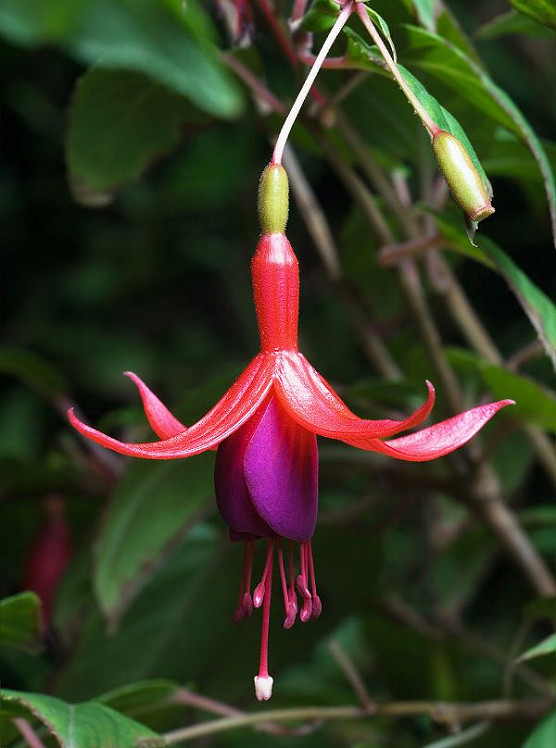
For anyone interested in more about the latest news in the world of Fuchsia Fuchsia News Winter 2023 (1) click here for a PDF of their newsletter.
Societies and their contact details
Date posted: Friday 12th July 2024

There are a number of special interest societies which members may be interested in finding out more about.
We list a few below:
Organisations the EHS is affiliated with and/or a member of:
Hampshire Federation of Horticultural Societies
National Dahlia Society – dahlia-nds.co.uk
National Chrysanthemum Society – https://chrysanthemum-ncs.org/
National Vegetable Society – www.nvsuk.org.uk
Perennial (Gardeners’ Royal Benevolent Society) – “perennial.org.uk”:“https://perennial.org.uk/
RHS (Royal Horticultural Society) -” https://www.rhs.org.uk/”:https://www.rhs.org.uk/
Other Societies and Organisations available:
Fuchsia Society – www.thebfs.org.uk
We will also be adding links to some of their newsletters on our advice page of the website.
If you are a member of any other societies you think we should add to the list please send to info@emshs.org.uk
New lines in peat free compost & organic fertilisers
Date posted: Tuesday 2nd April 2024
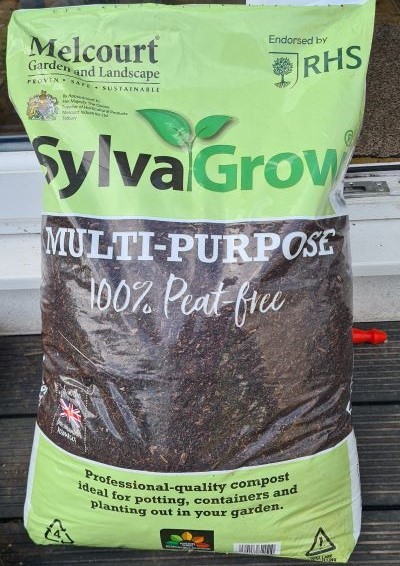
2023 has been a very successful year with members taking advantage of the many new lines in peat free compost and organic fertilisers.
The hut is now fully re-stocked and priced up for 2024.
Growing seed potatoes in open ground
Date posted: Tuesday 28th January 2025

Seed potatoes are available at the Hut. They are cheap (still 10p per tuber in 2025) and all three varieties are winners of the RHS Award of Garden Merit (AGM):
When you get your seed potatoes home you should remove them from the bag and put them in a light, frost-free, cool place, for example a spare bedroom window sill. Put them in an egg box or something similar with end with the rose of ‘eyes’, which are the buds which develop into shoots, pointing upwards. The other end has a stump from where it was joined to the parent plant. Strong dark green shoots should start to grow.
The ground shouldn’t be too wet when you plant potatoes. Around Easter time is the usual time to plant, but they can be planted up until the end of May. It’s simple enough. Use a trowel to dig hole the depth of the trowel, put a potato in, and cover with soil. Space early potatoes in rows 30cm apart. Rows should be 45cm apart. Second early and maincrop potatoes should be spaced roughly 45cm apart and rows 60cm apart.
Early potatoes should be ready to harvest in June or July, with second earlies
Supporting a New Community Garden
Date posted: Saturday 9th March 2024
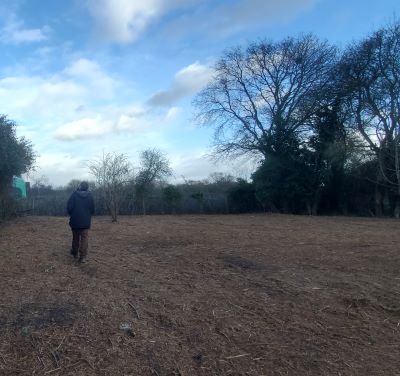
Victoria Road Community Garden Site
A site behind Victoria Road has been identified for the establishment of a new Community Garden. The initiative is being led by the Emsworth Residents Forum (ERF) with core funding from Havant Borough Council.
The EHS committee has been supporting in the planning stages and the project is now approaching implementation.
The site will provide a community garden featuring a small orchard, vegetable and soft fruit beds, plus some raised beds providing easier access for people with disabilities. This initiative is about the community coming together to grow and share the produce, but most of all to spend time together in the outdoors.
The plan will also involve local schools, giving them a place they can have hands on experience of growing their own food crops and learning about food sources.
If you would be interested in; helping to clear and establish the site; have any tools you could donate; or have any seeds or seedlings you can donate please contact info@emshs.org.uk
Asian Hornet - Report sightings!
Date posted: Sunday 9th June 2024

Asian Hornets an uninvited species turned permanent resident
By Graham Mortimer
They have now settled in their tens of thousands.
You will have seen some reports about the invasive non-native insect which was accidentally introduced into France in 2004 in a consignment of goods from East Asia and rapidly spread across Europe. The first sighting in UK was in 2016 and sporadic colonies were found and destroyed mostly around ports Dover, Southampton, Portsmouth and bizarrely Woolacombe. The pregnant queens probably hitched a ride on ferries carrying fruit or simply stuck in the grill of a holidaymaker’s car grill. Some say that they can be blown across the Channel by the wind.
Whatever the cause the Asian Hornet (AH) is now an enormous threat and following the aggravation of a few nests in fairly predictable areas , albeit difficult to find, they are now becoming established. Last year dozens of nests were found in Kent alone. Up to now there have been no verified sightings in West Sussex but we are surrounded!
It is not now just accidentally imported queens/colonies but they are breeding, becoming established and moving inland from the coast. Nests have been found in Hastings and The New Forest. Global warming has not helped at all.
Beekeepers with managed hives have been amongst the first to witness the AH’s activities as they ‘hawk’ around the hive picking off the bees when they return with their loads of pollen and nectar. Those they don’t kill remain scared and hide in the hive, the honeybee queen stops laying, there is no gathering of food and they starve to death. A hive is very quickly decimated.
The AH is not only a threat to the more obvious targets of honeybees but also to all pollinators, bumble bees, mason bees and all solitary bees, wasps etc. The AH is carnivorous and go for meat and fish in open air markets (not so prevalent here), they are opportunists and feed on road kill and other rotting carcases. They also like ripe sweet fruit and vineyards in France have failed due to their activity, there are plenty of potential targets around us.
We are now at a ‘tipping point’ at the end of the phony war and we are fully expecting the population to increase dramatically. Right now over-wintered and pregnant AH queens are emerging from their individual hibernation hideaways having survived last year’s nest destruction, or freshly arrived from France. The queen firstly constructs an embryo nest about 4-5cm in diameter and looking much like a wasp nest and hanging in a dry place. It will contain eggs and larvae but no workers. This is the ideal time to report the sighting to the Asian Hornet Watch team to put a stop to the development of a colony and nip the process in the bud.
When the first worker AHs emerge they construct a larger nest, often high in a tree but also in other inaccessible spots such brambles or even cliff edges. Each nest may contain around 5/6000 AHs of which 180-500 will be queens ready to start the whole cycle again. By comparison a colony of 40,000-60,000 honeybees will only have one queen!
We need the general public to be aware of this dangerous non native invader turned permanent resident and report sightings to Asian Hornet Watch by downloading the free app on iphone or Android or reporting by email alertnonnative@ceh.ac.uk. Always try to take a photo and give a precise location. The team will try to capture the AH alive, mark, track and triangulate, with other sightings, determine its destination and hopefully destroy the nest. Don’t kill the AH it is vital that its nest is found.
The AH is slightly smaller than our native European Hornet with bright yellow tips to their legs. The AH abdomen has one segment (the 4th) in yellow/orange the European Hornet has several yellow hoops (much like a rugby shirt!). It has a venomous 6mm sting and could be a threat to agricultural workers, those clearing undergrowth or even schoolchildren if they disturb a nest.
2024 EHS Marquee & Show a huge success
Date posted: Sunday 11th August 2024
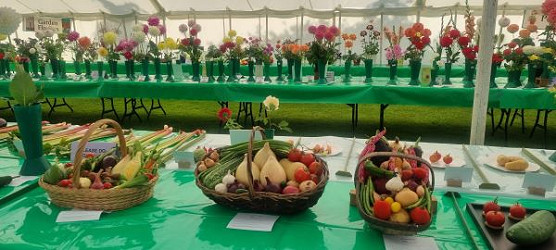
We had another great turnout for the Show and a Marquee filled with vegetables, fruit and flower exhibits, plus many arts and crafts.
Thank you to everyone who volunteered or entered exhibits in the EHS Marquee.
We had a number of new exhibitors this year which is great to see and the judges were very impressed given the difficult growing weather we all experienced.
So a huge thank you to everyone who helped in any capacity.
RHS Garden Entry Discount Card
Date posted: Thursday 11th April 2024

The EHS is an Affiliated Society of the RHS which entitles us to an RHS Garden Entry Card offering a 50% discount for two people at any time. As many members as wish to will be able to use it once per year, for a maximum of two people.
A great opportunity for any member planning to visit one of the RHS’s gardens.
Terms and conditions of use:
The card offers 50% discount for up to 2 members of the EHS to visit any RHS Garden (Bridgewater, Harlow Carr, Hyde Hall, Rosemoor and Wisley), except during RHS Flower Shows and RHS Glow Events.
The card expires 31st January 2025
If you would like to borrow the card send your request to info@emshs.org.uk
"Grown from Grounds" - Project recycling coffee grounds
Date posted: Friday 12th April 2024
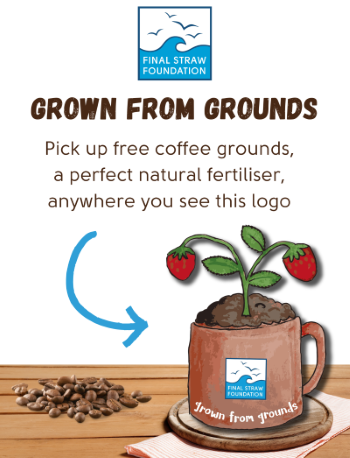
The Final Straw Foundation, a local environmental charity has started a new initiative called “Grown from Grounds”. It links coffee shops to gardeners to reduce food waste and form community connections.
Coffee grounds make up a huge amount of food waste thrown away from coffee shops, and the aim is to divert this waste from landfill. Like most organic kitchen waste, coffee grounds are great to recycle in the garden to benefit your soil and your plants. Look out for the logo in the image and any cafe displaying the sign will have coffee grounds for free.
For more information about the Final Straw Foundation visit https://finalstrawfoundation.org/. Final Straw Foundation is a charity registered in England, number 1191500
Gardeners World advice on using coffee grounds in your garden.
Coffee grounds are an excellent compost ingredient and are fine to apply directly onto the soil around most garden plants if used with care and moderation. The grounds are relatively high in nitrogen and also contain potassium and phosphorus, as well as being a source of moist organic matter.
The safest way to use coffee grounds in the garden is to add them to compost containers or worm bins. Used grounds rot down well. While applying coffee grounds directly onto the soil around most plants is usually fine, this should be done with care as using grounds in this way is never a one-method-fits-all approach. The chief potential problem is that if applied in quantity to the soil surface, the fine particles clog together to form a barrier that prevents water and air from reaching plant roots.
Coffee tends to be slightly acidic and is therefore good for acid-loving plants such as hydrangeas, as well as nutrient-hungry plants like roses.
Which plants do not like used coffee grounds?
Coffee grounds are likely to contain some caffeine unless it is decaffeinated coffee. Whilst most of the caffeine in coffee is transferred to the drink in the brewing process, some may remain. Caffeine restricts the growth of certain plants, notably tomatoes, and may inhibit germination of seedlings.
As a pest repellent against slugs, some gardeners have had good results while others report that it has no effect. Other gardeners use coffee as a repellent for ants, cats and foxes, again with varying results. As with any organic repellent, frequent application is needed and especially after rain.
Note caffeine in coffee can be toxic to dogs. Whilst grounds that have been brewed usually contain very little caffeine, if your dog tends to eat anything going, don’t spread grounds on the soil surface but instead add to the compost bin or bury in the soil.
Items lost/ found are held at the hut
Date posted: Thursday 6th June 2024

We have a number of items of property which have been found at various EHS events. If you think you have lost an item it will have be taken to the Hut were they can be reclaimed.